
Checking New Britain Criminal History
Start with the question the record must answer. The Connecticut Judicial Branch Criminal/Motor Vehicle Case Look-up shows pending cases, displayed convictions, daily dockets, and docket-number searches. New Britain Police supplies the city-created incident or arrest report. The State Police Bureau of Identification, or SPBI, supplies a statewide identity history. CT DOC answers a narrower custody question. These products overlap, but none can stand in for all the others.
Gather the full legal name, spelling variants, an approximate birth year, and any known police case or court docket number. An HHB prefix points toward New Britain Judicial District Part A, while H15N points toward G.A. 15 Part B. A docket number is more reliable than a common name. For a police request, the incident date, time, location, and names can help when the case number is unknown.
- Choose Pending Case, Convictions, or a docket-number search at the Judicial Branch hub.
- Try both New Britain court labels when the Part A or Part B route is unclear.
- Match the docket, court location, birth-year detail, and case status before drawing a conclusion.
- Request the underlying city report from New Britain Police when the event narrative matters.
- Ask the clerk for an official disposition or use SPBI for a statewide self-review.
New Britain’s Two-Counter Rule
The key local distinction sits between Chestnut Street and Franklin Square. New Britain Police at 10 Chestnut Street maintains incident reports, arrest reports, local record checks, and police-held crash records. New Britain Superior Court at 20 Franklin Square maintains the docket and official case file. The police report describes what officers recorded and alleged. The court file shows what prosecutors filed and what the judge or court ultimately did.
Use the police counter for an event narrative and the court clerk for a certified outcome. Calling one office for the other office’s document causes needless delay. The buildings are close, yet the records have separate custodians, rules, and meanings.
New Britain Police Records
10 Chestnut Street, New Britain, CT 06051
860-826-3190
Monday-Friday, 10 a.m.-3 p.m.
New Britain Superior Court
20 Franklin Square, New Britain, CT 06051
860-515-5080
Official dockets, files, and dispositions
New Britain Official Background Checks
For review of one’s own statewide record, the official repository is DESPP’s Division of State Police, State Police Bureau of Identification. The Connecticut Criminal History Request System handles pre-enrollment for current services. SPBI lists a $75 Connecticut criminal-history search. A name and date-of-birth result can confuse people with similar identifiers, so a fingerprint-supported route gives stronger identity assurance.
Fingerprint capture is a step, not the final record product. SPBI provides capture at its Middletown site for $15 after the correct enrollment route, and New Britain Police directs local users to BioIdent Services. Confirm that a capture site and service code match the requested transaction before paying. An FBI Identity History Summary is subject-only and requires fingerprints; it is not a certified Connecticut court disposition.
The SPBI criminal-history page lists the current request channels, identification rules, and state fees.
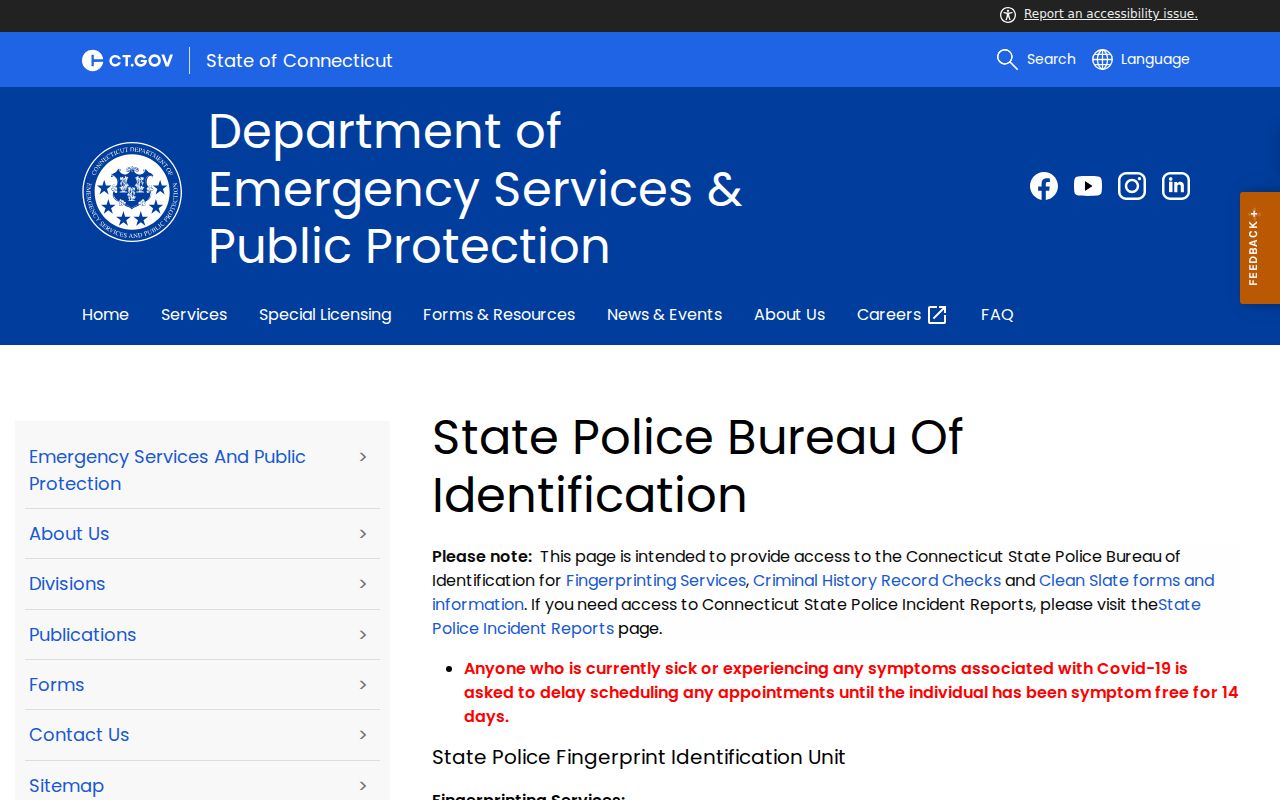
Check that page against the exact CCHRS service because program-specific routes and federal components can differ.
New Britain’s Local Record Check
New Britain Police offers a $15 local criminal-record check in person during Records Bureau hours, with two-business-day processing. That product is useful when the question is limited to the department’s local records. It is not statewide, is not the same as a fingerprint-linked SPBI history, and cannot certify a Superior Court result.
The fee differences reveal the product differences. A police report copy costs $0.50 per page in cash. Certification is $5, and a photo CD is $10. Ordinary incident reports generally take three to five working days. Ask what is ready before visiting because active investigations, retention rules, and protected information can affect release.
| Product | Fee | Route |
|---|---|---|
| Local record check | $15 | In person, two business days |
| Police report | $0.50 per page | In person or mail |
| Certified police report | $5 | Confirm with Records |
| Photo CD | $10 | Request from Records |
| State history | $75 | CCHRS/SPBI route |
New Britain Criminal Record Types
A criminal record is a family of documents. New Britain Police may create an incident report without making an arrest. An arrest record documents police action but does not prove guilt. A court case file records filed charges, appearances, motions, pleas, judgment, and sentence. SPBI’s repository history organizes identity-linked arrest cycles and reported outcomes. CT DOC records current or past custody data, while the Connecticut Sex Offender Registry is a separate public-safety system governed by Chapter 969.
Warrant material has its own limits. Executed arrest-warrant information may become available, but unserved or sealed warrants are not public search items. Probation is run by the Judicial Branch Court Support Services Division, and parole authority rests with the Connecticut Board of Pardons and Paroles. Neither offers a broad public person-search database for supervision notes.
- Police records: reports, arrest details, event coding, and releasable attachments.
- Court files: filed charges, scheduled events, pleas, dispositions, and sentences.
- Repository histories: fingerprint or name-linked arrest cycles and reported outcomes.
- Custody records: CT DOC status, location, controlling offense, and sentence fields.
- Registry records: public registration facts for qualifying offenses, subject to statute.
New Britain Records Without a Sheriff
New Britain has no county sheriff records unit or city jail roster. Connecticut ended operational county government and consolidated county jails and prisons under CT DOC. A city arrest can therefore create an NBPD report, a Superior Court docket, an SPBI identity entry, and a CT DOC custody record without ever passing through a county sheriff.
For current custody, use the CT DOC Inmate Information Search by DOC number or by name and date of birth. The system updates daily and includes both accused and sentenced people. “Accused” means pretrial status, not conviction. A person released by police may never appear there, so a no-result response does not prove that no arrest occurred.
The Connecticut Board of Pardons and Paroles identifies the separate statewide authority for pardon and parole decisions.
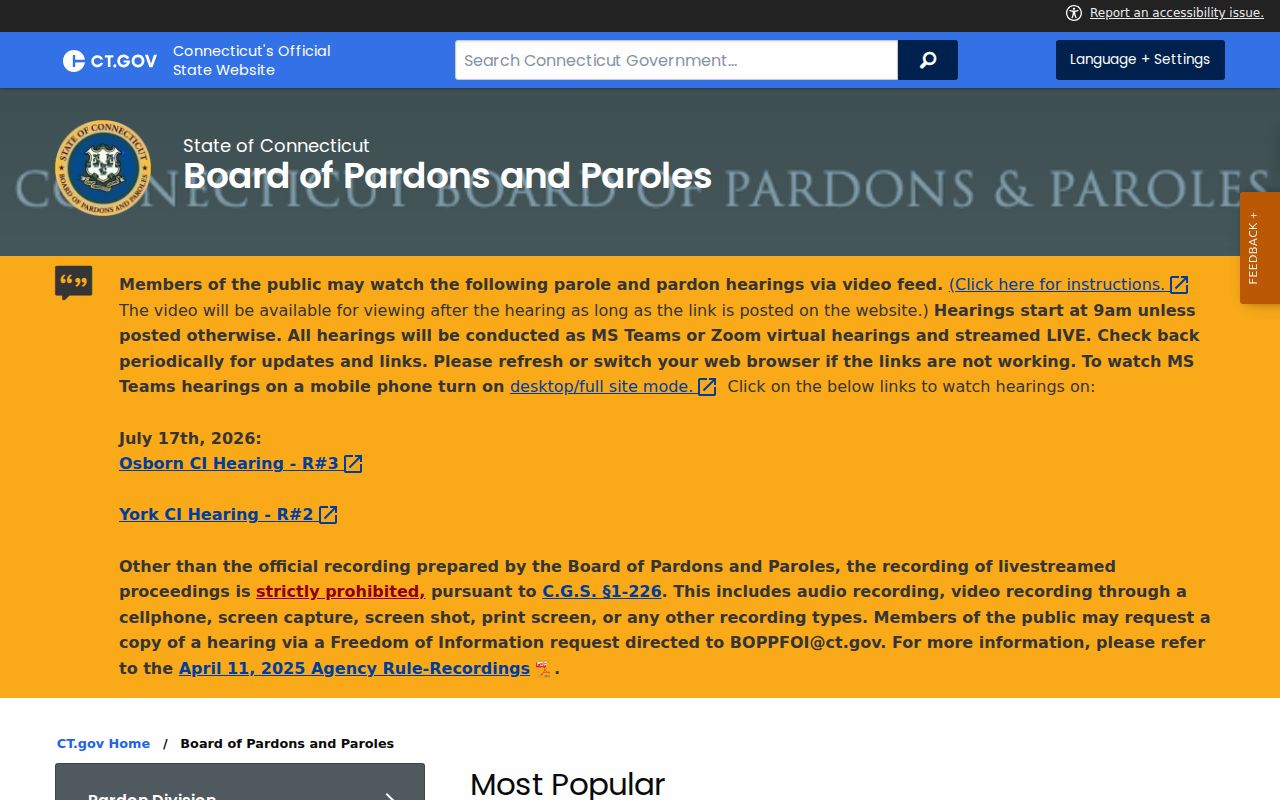
The Board is the proper state authority for pardons and parole decisions, not a local sheriff office.
Inside a New Britain Criminal Record
Read a repository entry as a sequence, not a flat conviction list. Identifiers connect an event to a person. Arrest charges show what police recorded at that stage. Prosecutors can amend or replace them. A disposition is the court’s outcome, and the sentence describes consequences after a conviction. Missing outcomes should be checked against the official court file before asking SPBI about a correction.
| Name & Identifiers | Legal name, aliases, birth data, state identification, and fingerprint transaction identifiers. |
|---|---|
| Arrest / Booking Data | Arrest date, agency, event number, identity processing, and initial charges. |
| Charges & Statutes | Police allegations or later court-filed offenses with statutory references. |
| Disposition | Pending, dismissed, nolled, acquitted, or convicted outcome reported by the court. |
| Sentence | Incarceration, probation, fine, discharge, or other ordered terms. |
| Custody / Supervision | Accused or sentenced custody, location, and public release fields where available. |
New Britain Criminal Docket Prefixes
HHB and H15N are routing clues. HHB identifies the New Britain Judicial District Part A stream, which handles the most serious matters. H15N identifies G.A. 15 Part B, which handles the large daily flow of other felonies, misdemeanors, motor-vehicle cases, and infractions. Both operate at 20 Franklin Square.
- Arraignment
- The first court-stage presentation of charges and release conditions, not a trial.
- Nolle
- A prosecutor’s decision not to proceed at that time, subject to Connecticut rules and erasure timing.
- Disposition
- The recorded outcome of a charge.
- Continuance
- A rescheduled event that does not itself show guilt or dismissal.
Search both New Britain court locations if the prefix is unknown. The broader New Britain criminal court cases resource explains the separate pending, conviction, and docket routes.
New Britain Criminal Record Access Laws
The Connecticut Freedom of Information Act governs access to municipal and executive-agency records, while court access also depends on Judicial Branch rules and sealing orders. Access does not mean every page is online or unredacted. A focused NBPD request should identify the case, date range, event, and requested format, then ask for any segregable nonexempt portion when part of a record is withheld.
Key statutes:
Conn. Gen. Stat. §1-210 grants access while protecting specified investigative material.
Conn. Gen. Stat. §1-215 defines the public record of arrest and pending-case access.
Conn. Gen. Stat. §1-206 provides a route to appeal a denial to the FOI Commission.
Conn. Gen. Stat. §54-142a governs erasure for specified outcomes and eligible records.
New Britain Reports Under Review
An ordinary NBPD incident report generally needs three to five working days, but time alone does not make every part public. Active investigative detail, juvenile arrest information, uncorroborated allegations, protected victim identities, signed witness statements, and confidential-source information can be withheld or redacted under state law. Crash reports are ordinarily available after about ten days, although related criminal charges can delay public release until final disposition.
A written request should ask for existing records rather than answers or new analysis. Include the case number if known, a precise date and location, involved names when lawful and needed, and the requested format. If Records withholds part of the file, ask for the nonexempt remainder and the statutory basis for each withholding.
Note: Preserve the denial date because a Connecticut FOI Commission appeal generally must be filed within thirty days.
New Britain Restricted Criminal Records
Connecticut uses “erasure” as the legal term. Section 54-142a covers records after an acquittal, dismissal, qualifying nolle period, pardon, and eligible Clean Slate conviction. Erasure is more than removal from a search screen. State law restricts disclosure and requires downstream bulk-data purchasers to update and delete erased matters.
Juvenile, youthful-offender, erased, and sealed matters do not appear in ordinary public searches. The Judicial Branch may also stop displaying a conviction after the applicable online period. A missing screen result can therefore reflect lawful restriction, an online display limit, a spelling problem, or reporting delay. It should not prompt reconstruction through unofficial people-search sites.
New Britain Criminal Record Erasure
Clean Slate eligibility depends on the specific offense, outcome, completion of the sentence, waiting period, and statutory exclusions. An offense appearing on an eligible list can still be excluded by another fact, such as a family-violence designation. The Connecticut Clean Slate portal provides the current review and hearing route when a person believes an eligible record still appears.
An absolute pardon is a separate discretionary process through the Board of Pardons and Paroles. Applicants obtain a recent DESPP rap sheet through CCHRS and must follow the fingerprint route for that product. A certified court disposition is useful when the repository outcome is missing or wrong.
The state’s Clean Slate information page is the best source for current implementation and review notices.
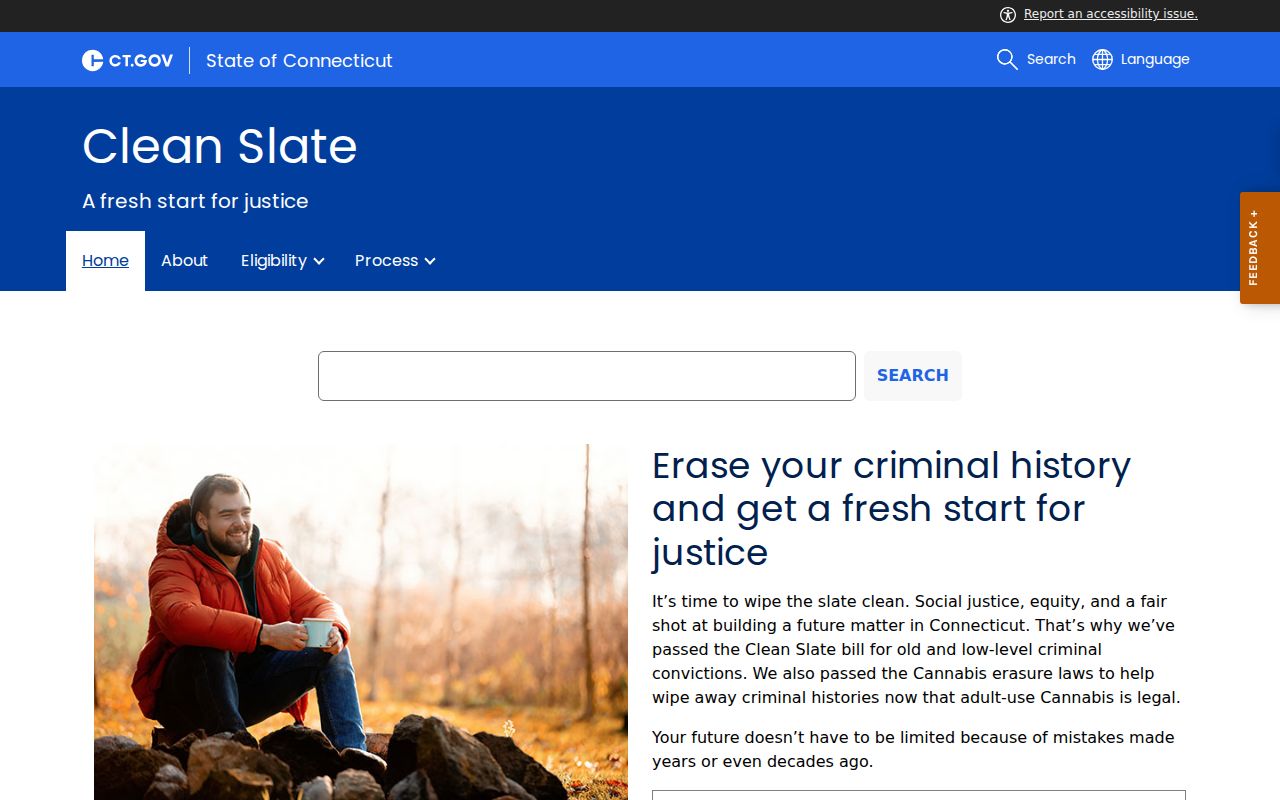
Its review path matters when an apparently eligible New Britain matter remains visible after the expected update.
The official erasure law shows why old data must be treated carefully.
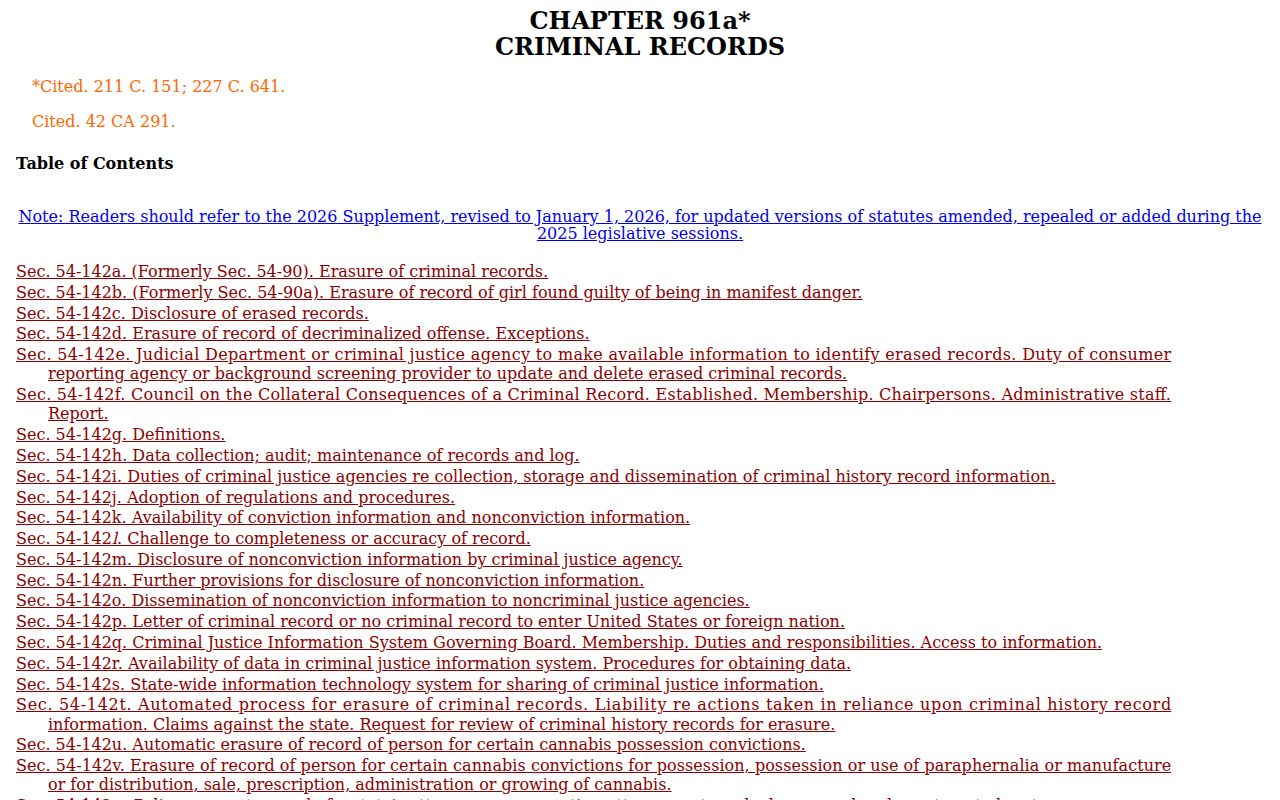
Chapter 961a defines the statutory boundaries rather than leaving removal to a general website request.
New Britain Criminal Records by City
New Britain is the only city guide because this project covers the city, not Hartford County’s municipalities. City-created police reports begin with NBPD, while criminal cases are heard in Connecticut Superior Court rather than a municipal criminal court. The focused city page connects local report access, the Part A and Part B court routes, and the state custody system without implying that a county sheriff holds the records.
New Britain Criminal Records
76,286 estimated residents in 2025 · NBPD records and Superior Court routing
New Britain’s Federal Record Layer
A federal matter arising in New Britain is filed in the U.S. District Court for the District of Connecticut, not G.A. 15. PACER is the federal judiciary’s official electronic case-access service and requires an account. The District of Connecticut is the authoritative court source, while the federal Bureau of Prisons locator covers federal custody only.
The district court’s official site provides the federal starting point.
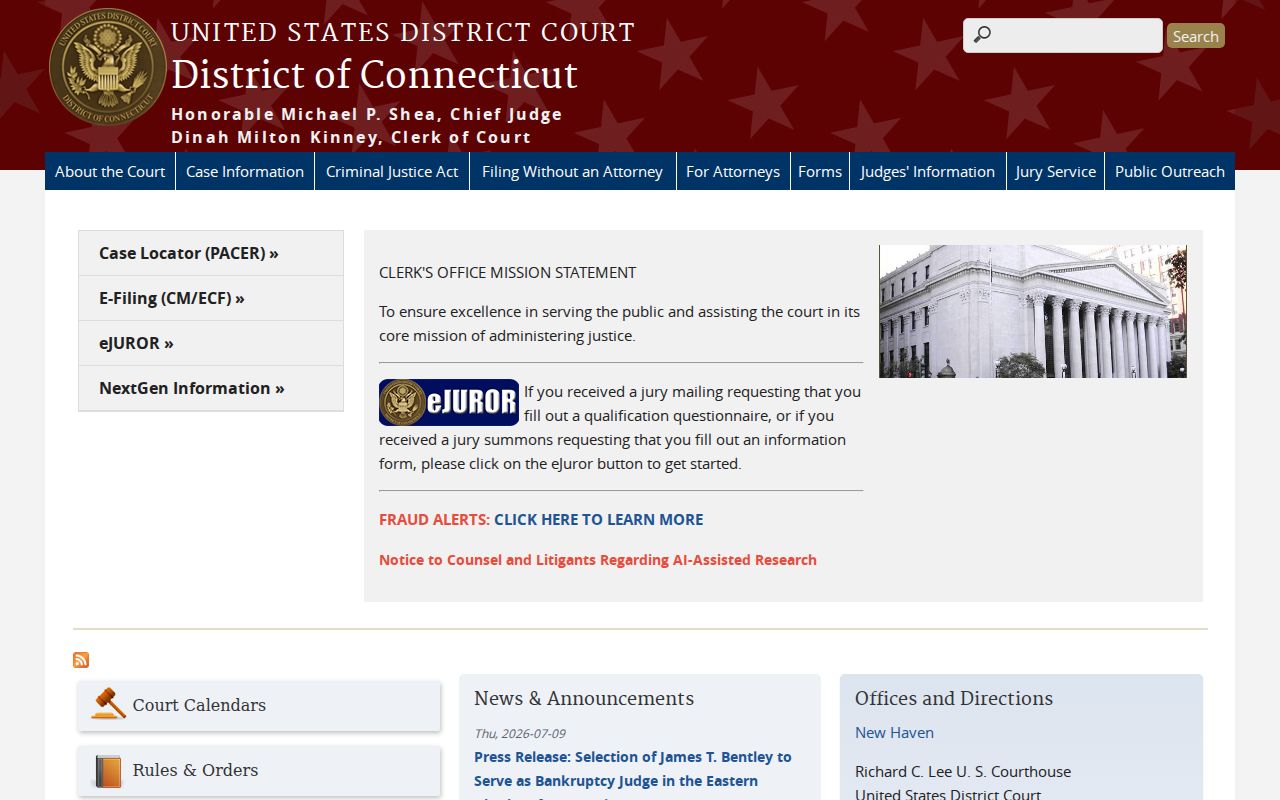
Connecticut state dockets and CT DOC custody will not substitute for that federal layer.
For a federal custody question, use the Federal Bureau of Prisons inmate locator.
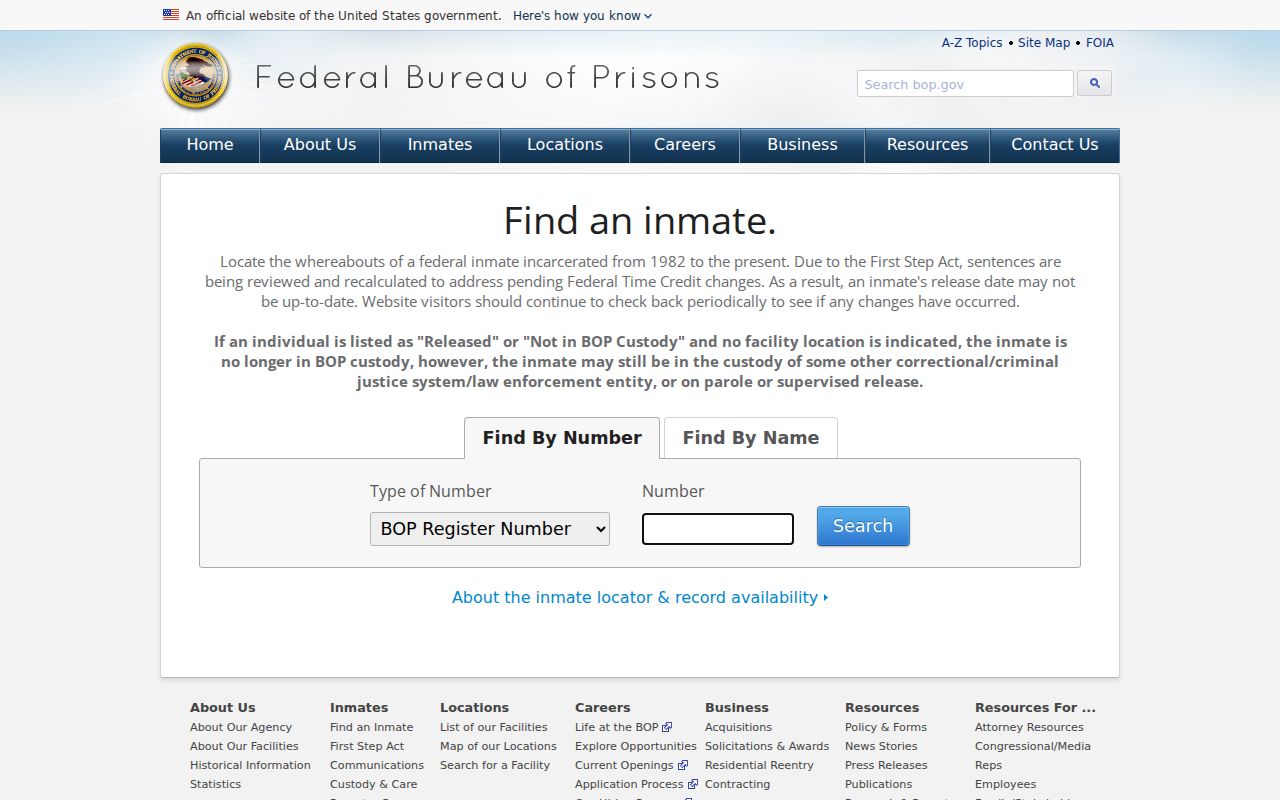
A BOP result is not a state court history and will not show a person held only by Connecticut DOC.
New Britain Records Move Statewide
The local sequence is simple to state but easy to misread: NBPD event and arrest record → prosecutor review → Superior Court docket and disposition → SPBI repository update. CT DOC adds custody fields when a person enters state custody. Each system updates on its own schedule, so a newly filed case may appear before a repository disposition or a released person may disappear from the current custody search.
The State’s Attorney reports that each on-site arrest and arrest warrant from its ten-community district is brought to the office for review. Police arrest charges are therefore not automatically the final filed charges. Compare the docket with the report, then use a certified disposition when correcting an SPBI entry.
The CCHRS interface is the state entry point for repository requests.
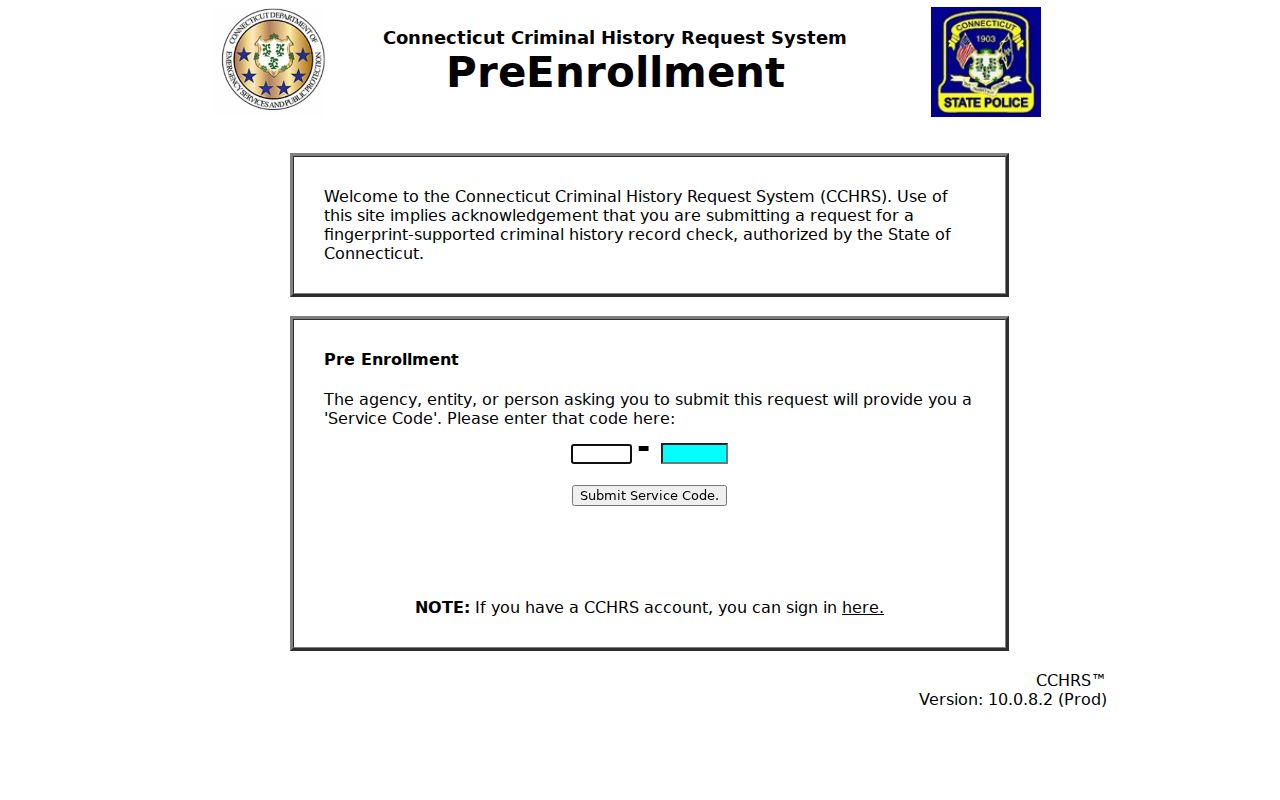
Its service selection and identity fields determine the product requested, so save the confirmation and follow the service-specific capture instructions.